
Search Articles!
Latest Articles
Dalit Panthers: A Revolutionary Force for Social Justice in 1970s India
The Dalit Panthers, a name that once reverberated through the streets of Mumbai, represents a significant chapter in India’s struggle for social justice. Emerging in the 1970s, this organization, though short-lived, left an indelible mark on the fight against caste-based discrimination and oppression. This article delves into the history…
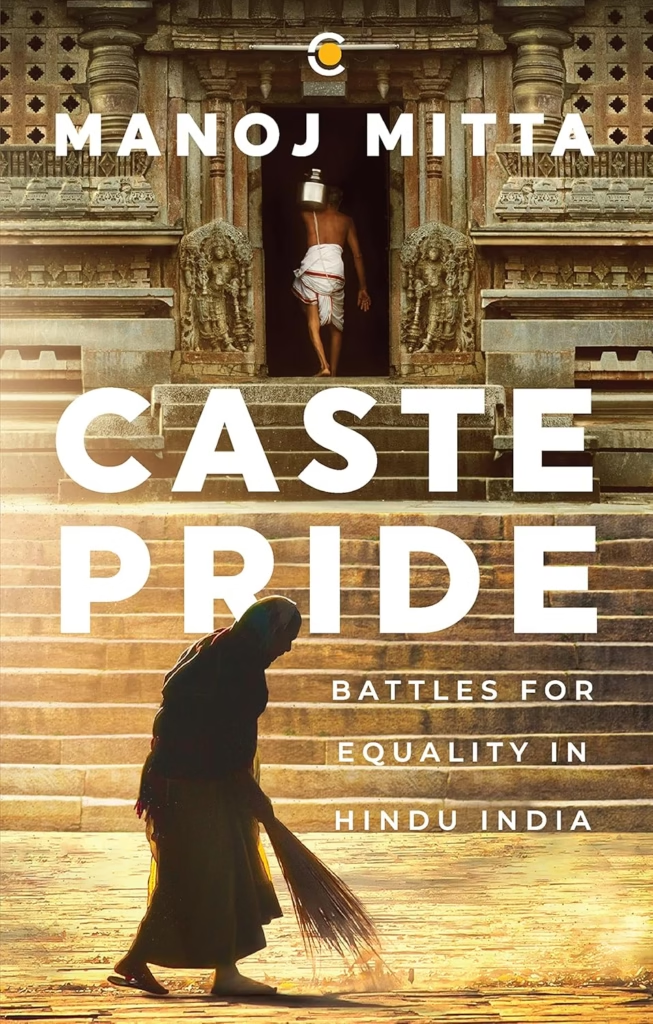
Examining Historical Caste Status: Texts & Legal Battles
Introduction: Unearthing Historical Caste Status Historical records and religious texts often reveal surprising narratives about social structures and caste classifications. A significant historical debate revolves around the status of various groups, including powerful rulers and warriors, and their classification within the caste system. Were the groups who considered themselves…

Truth of Ayodhya: History and challenging the Fallacious Narrative
Truth of Ayodhya: History and Challenging the Fallacious Narrative Imagine a sacred city, its history rewritten, its true past buried beneath layers of religious fervour. This is the story of Ayodhya’s Truth. Is Ayodhya, the city of the Ram Temple, truly the birthplace of Ram, or does its history…

Decoding Caste Politics, Creamy Layer & Social Justice: Truth Revealed
Decoding Caste Politics, Creamy Layer & Social Justice: Truth Revealed Recent debates in parliament and discussions around the creamy layer criteria have sparked widespread reactions. Are these decisions justified? Why is there so much controversy? Let’s delve into the truth behind these issues, exploring the facts and implications of…

Caste System in India: Court Judgements & Impact
Caste System in India: Court Judgements & Impact India’s complex social fabric is interwoven with the threads of the caste system in India, a system that, despite legal prohibitions, continues to influence various aspects of life. This article delves into recent court decisions that shed light on the ongoing…

Ambedkar’s 22 Vows and Buddhism: Path to Equality
The Enduring Significance of Ambedkar’s 22 Vows Dr. B.R. Ambedkar’s 22 vows, taken in 1956, continue to resonate deeply, sparking discussions and even controversy. These vows and accepting Buddhism were not merely a personal declaration but a profound statement of principles designed to guide individuals toward a life of…

Rights of Men: Gender, Law, and Society – Balanced Perspective
Rights of Men: Gender, Law, and Society – Balanced Perspective Welcome to a crucial discussion on a pressing issue: the challenges faced by men in contemporary society. This article delves into the multifaceted challenges men encounter in today’s world, focusing on gender dynamics, legal frameworks, and societal biases. We…

History of Caste and Surname in India: A Comprehensive Guide
History of Caste and Surname in India: A Comprehensive Guide This article delves into the origins of surnames, their deep-rooted connections with the caste system, and their evolution across the ages. This exploration aims to provide a comprehensive understanding of Caste and Surname in the Indian context, shedding light…
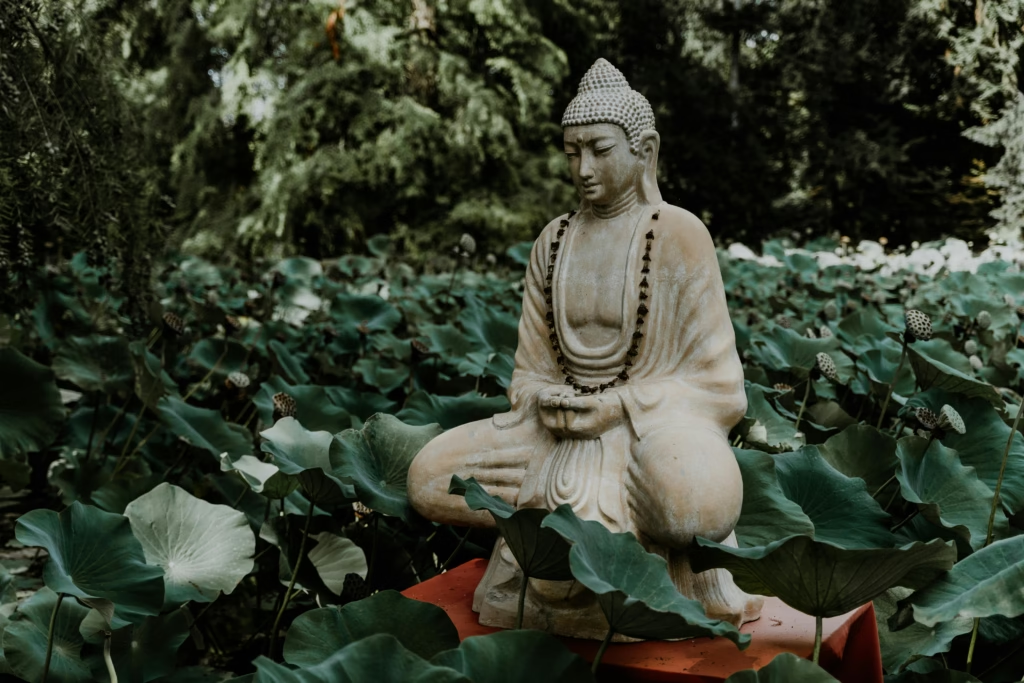
Unearthing Orissa’s Budhist Past: Evidence and Impact
Orissa, a state on the eastern coast of India, is often associated with its vibrant Hindu culture, particularly the Jagannath Temple in Puri. However, beneath the surface of popular narratives lies a rich and largely obscured Orissa’s Buddhist history. This article delves into the historical evidence suggesting that Orissa…

Mathura: Finding the Truth Behind Birthplace of Krishna
What if everything you thought you knew about Mathura was wrong? For centuries, Mathura has been synonymous with Krishna. But what does the real history reveal? Today, we will delve into the depths of history to uncover the truth. We’ll explore Mathura through archaeological findings, travellers’ accounts, and historical…

Why This Matters?
Truth thrives in debate, not silence.
India’s social history is filled with misrepresented narratives that have justified caste oppression. We challenge these narratives through scientific evidence, archaeology, and rational inquiry. Join us in building a future where reason, not caste, shapes identity.
Social Unity & Collective Progress
A caste-free society fosters unity by breaking down artificial barriers of hierarchy. When individuals are judged by their abilities, not their birth, communities can collaborate effectively, driving collective progress. Imagine a world where every child, regardless of caste, has equal access to education, healthcare, and opportunities. This is the foundation of a truly democratic and just society.
Economic Empowerment & Innovation
Casteism perpetuates economic inequality by restricting access to resources and opportunities for marginalized communities. A caste-free society unlocks the potential of millions, enabling them to contribute to the economy and innovate without fear of discrimination. From Dalit entrepreneurs to Bahujan scientists, the end of caste means a stronger, more inclusive economy.
Mental Liberation & Human Dignity
Casteism dehumanizes both the oppressed and the oppressor. A caste-free society restores human dignity by erasing the stigma of ‘untouchability’ and the guilt of privilege. It allows individuals to define themselves by their actions, not their caste, fostering mental liberation and self-respect for all.